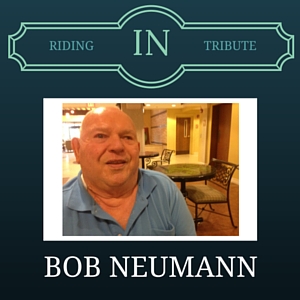
If you would like me to ride in tribute of your loved one, please email a photo to [email protected] or [email protected], include the person’s name and a brief note if you like, and send your contribution.
The entire $100 donation, is tax deductible and will go toward Alzheimer’s programs at Cedar Community.
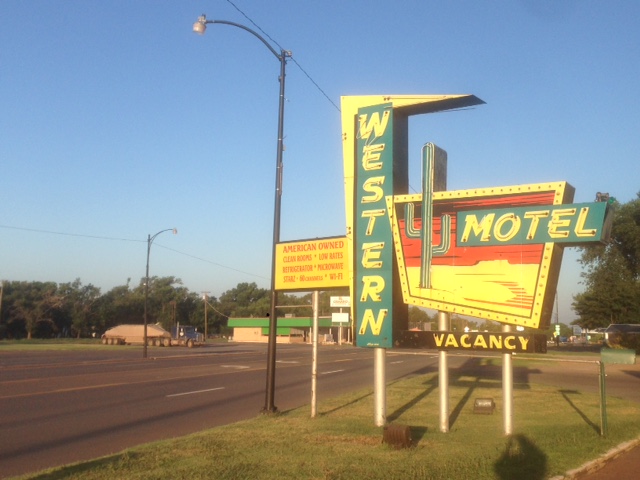
Trucking along on the Historic Route 66 and finding the bones of some old motels along the way. Some are obviously closed while others can still turn a buck or two.
Stopped at the Route 66 Museum in Elk City and it was closed.
Then I pushed along to the museum in Clinton, about 23 miles away… But it sure felt farther.
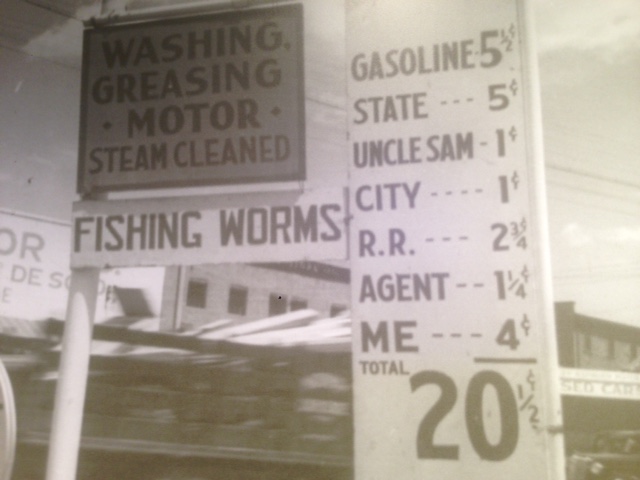
The art at the museum in Clinton is colorful and the photos totally grasp the hard times and the changes going on across the country.
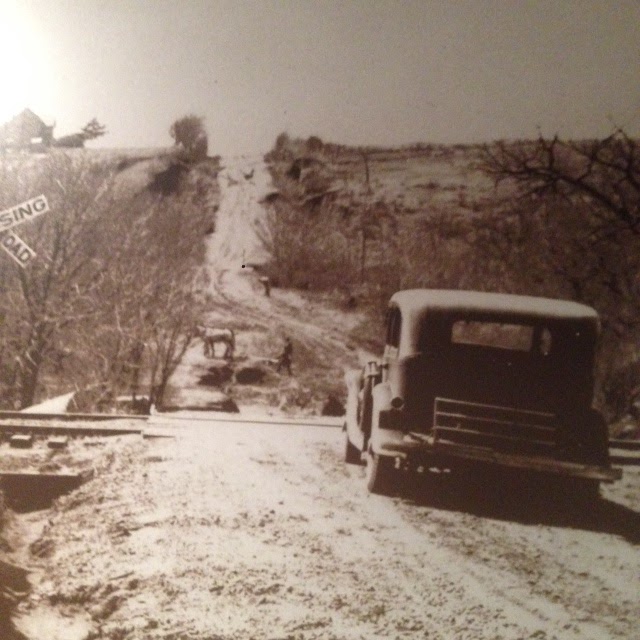
Typical road conditions of Route 66 in 1920.
Originally commissioned in 1926, Route 66 became the first national highway to cross the Midwestern part of the country from east to west. It was 2,448 miles.
BELOW: This is a sharecroppers family near California in April 1935.
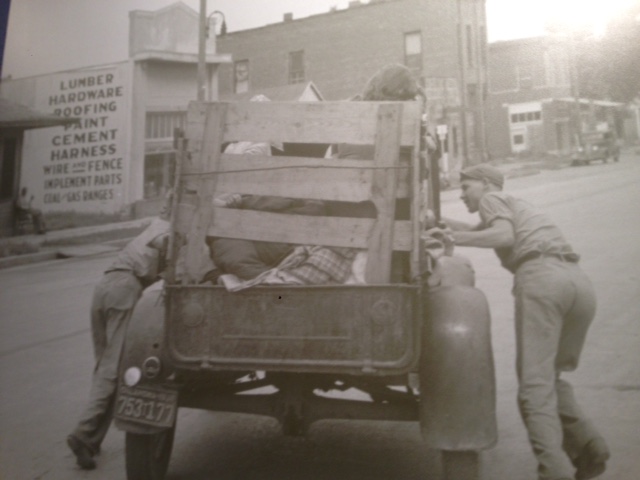
A migrant family in Oklahoma pushing a truck to get it started and head to California. Photo c. 1939.
The first graduating class of Oklahoma Highway Patrol Troopers, c. 1937.
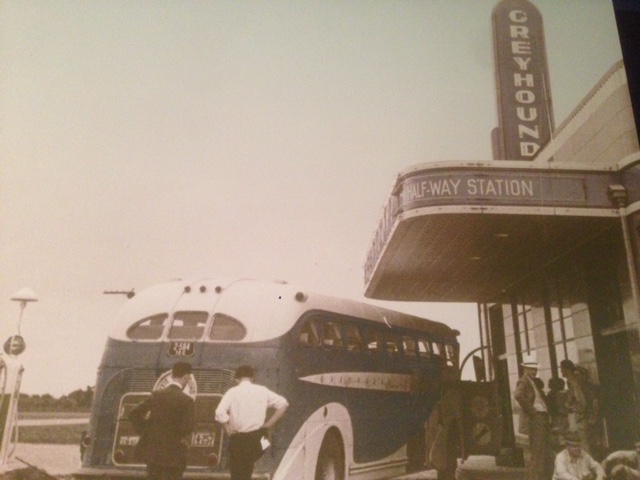
Greyhound bus from c. 1937. I’m trying to remember where the Greyhound stopped in West Bend. I think it was at George Webbs on S. Main. Did it make a stop at the Red Owl on Highway 33?
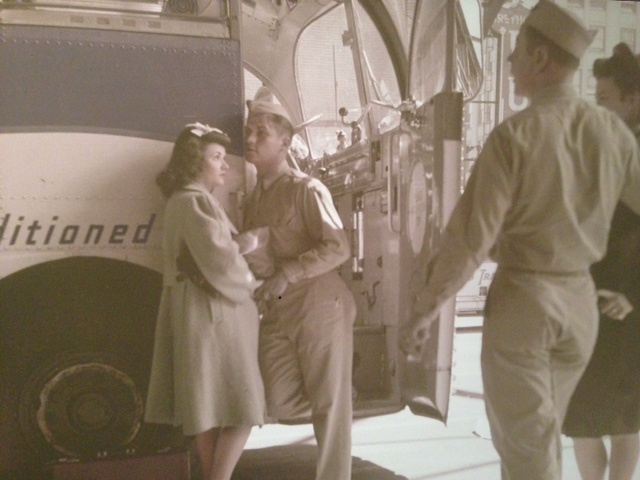
ABOVE: A soldier saying goodbye to his gal before getting on the Greyhound.
Just simply a classic photo.
________________________
On a side note, today’s Kindness of Strangers Award goes to Kimber from St. Mary’s Catholic Church in Clinton, OK.
Kimber helped get me settled in a house across the road from the parish. At 58 she lost her mother in February and her husband shortly there after.
“It’s not fun, I tell you, to lose your two best friends like that,” she said.
Kimber had an upbeat personality and spoke about keeping busy.
A secretary in the church office, Kimber had lived in Clinton her entire life.
Her husband was 15 years her senior. “I just gotta keep movin on,” she said. “What else can you do…. but, it hurts – there’s no foolin anybody about that.”
Black and white photos courtesy the Route 66 Museum.
One of my most favorite encounters so far has been with Harley in Erick, Oklahoma.
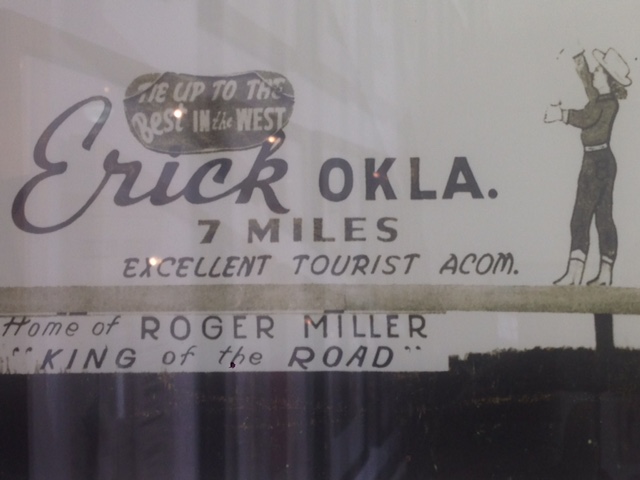
After a much-needed rest stop at the Roger Miller Museum
I drifted down the road to a building that had
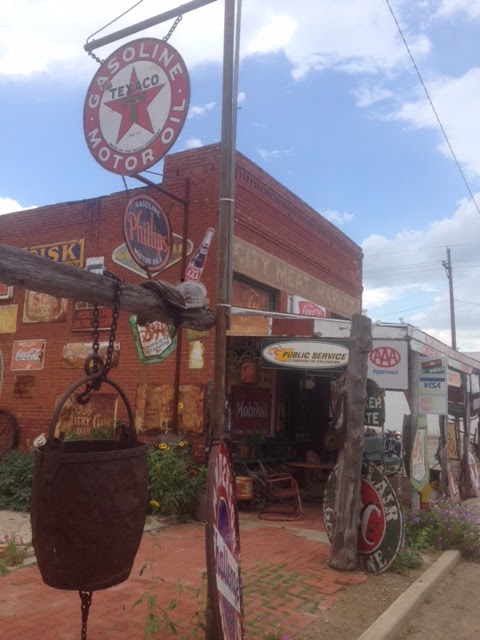
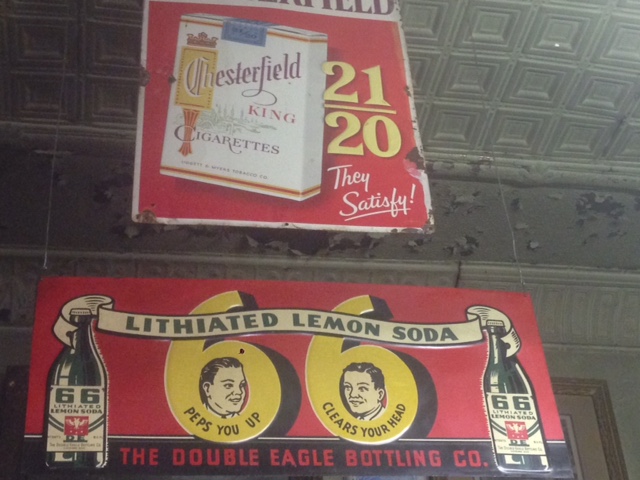
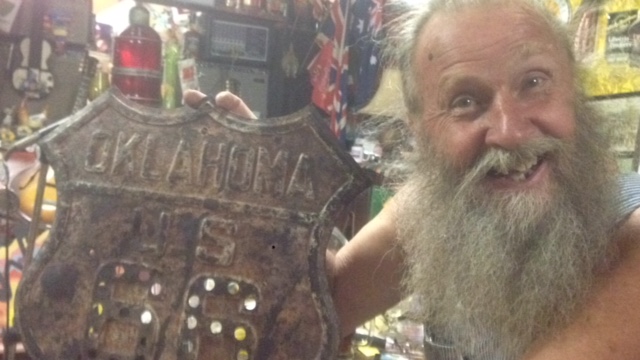
a ton of colorful vintage business signs.
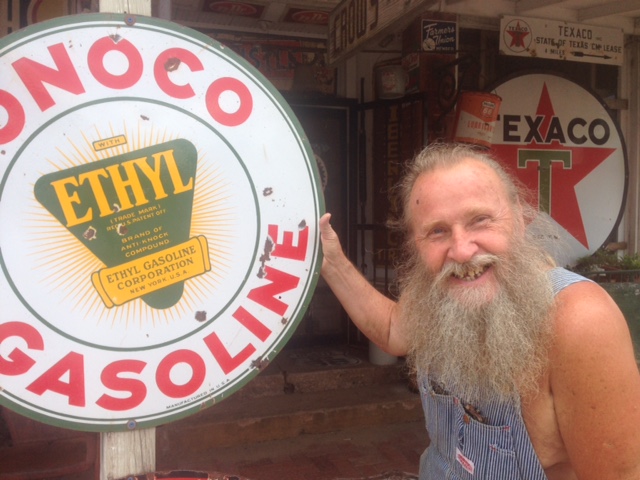
“Take as many pictures as you like,” said Harley.
He was the owner of the shop, with was the former City Meat Market turned into a frequent tourist stop just off Route 66.
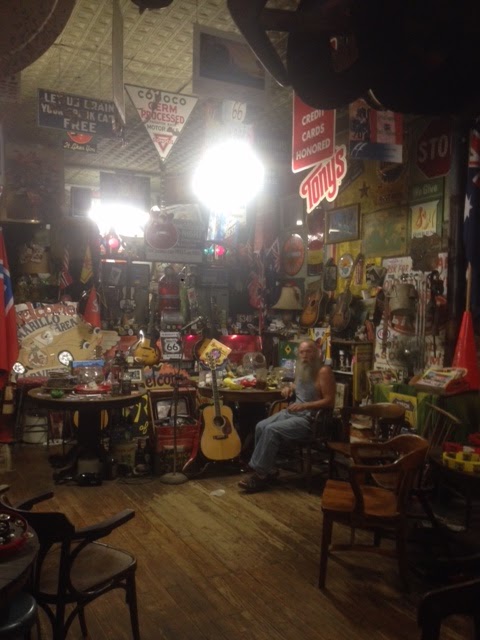
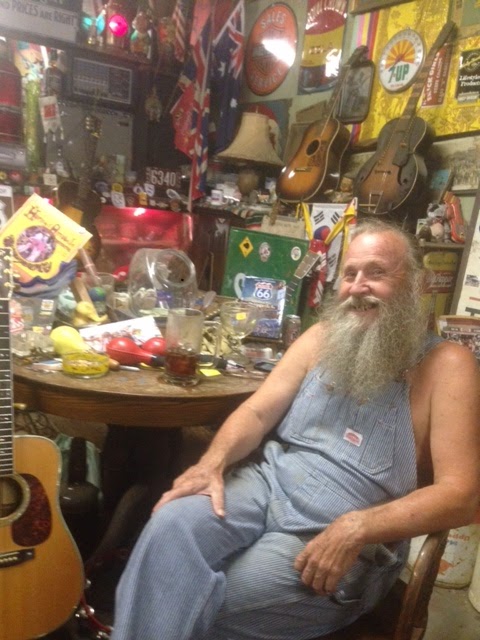
Harley was dressed in well-worn blue-and-white bib overalls. He was minus a shirt…probably cooler that way. Harley, 76, had his gray hair pulled back in a ponytail. His voice was gravelly and his personality eccentric.
I found him endearing, entertaining and lonely.
“Take as many photos as you want,” he said again as he flipped on the lights inside the store.
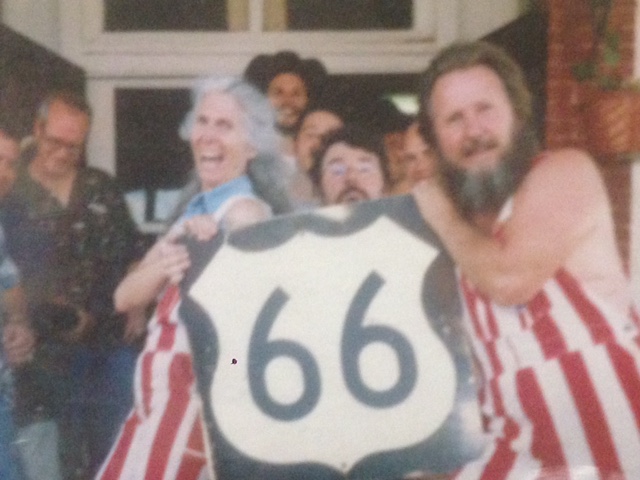
There are photos with Harley and his beloved wife Annabelle; the pair apparently drew more attention than the local museums.
“Now what are you doing on this bike trip,” said Harley. “You want a cold drink?”
I declined and Harley came back with a root beer and poured it in a frosty mug that looked like it could hold 64 ounces.
I explained the tour and then got distracted by a picture frame full of rattlesnake tails.
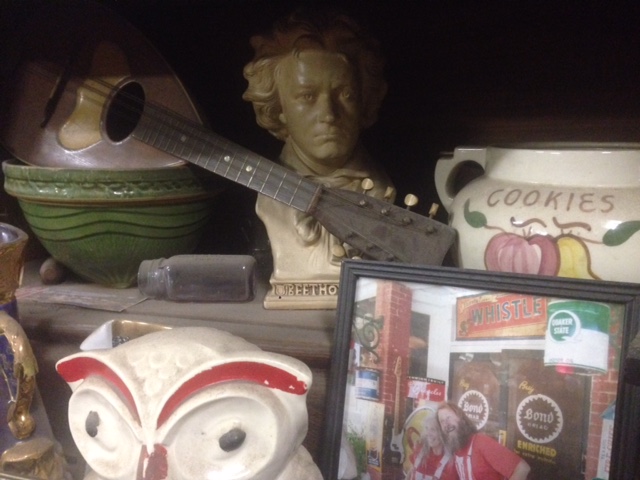
Harley had a lot of musical instruments mixed in with his old-school items.
There were tambourines and markkas. “Let me sing a song for your dad,” said Harley as he strapped on his guitar. “Roll that video.”
And with that Harley belted out a dedication tune of Route 66 to Al Steffes.
Some people might have been scared. I thought it was wonderful.
After the song Harley said, “You want to come over and see my house? I call it the castle-slash-sanitarium.”
How could a gal resist!
I felt a little uneasy. I could see through Harley’s shtick … But I was nonetheless a little wary so I …..
STAY TUNED TO FIND OUT…. Did I go along with him or not?
About 7 miles after crossing into Oklahoma I pulled off the road to seek shelter for the sun at a gas station in Erick. Hiding behind a big stand of trees was a billboard for the Roger Miller Museum.
The museum was in the old Hood Drug Store. Back in the day it was run by Ed Hood who was uncle to Darla Hood from the Little Rascals.
The drug store had a soda fountain and was a popular teen hangout for the Erick High Schoolers. (They were the Bearcats)
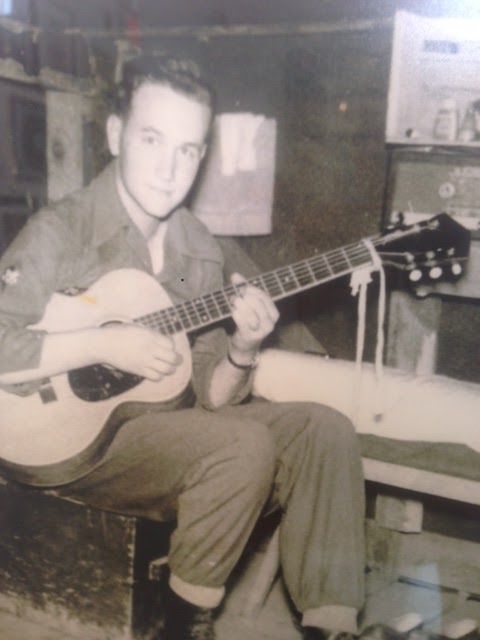
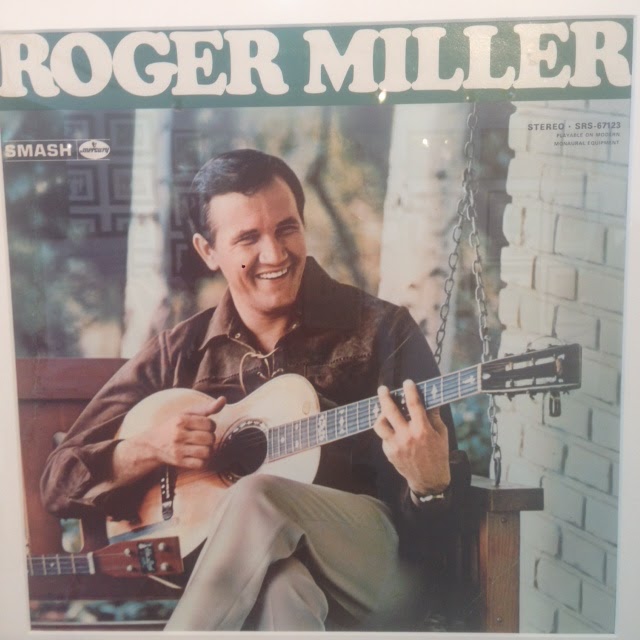
Lots of vintage photos and stories about Miller who apparently was a handful while growing up.
Miller moved in with his aunt Armia and said it was “so dull you could watch the colors run.”
He also mentioned “the town was so small the town drunks had to take turns.”
In school Miller was one of 36 students. “Me and 36 Indians,” he said. “We had a high school dance and it rained 36 days straight.”
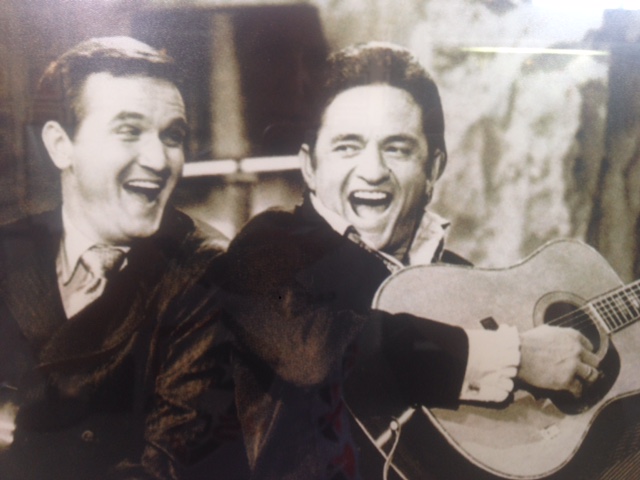
Miller and Johnny Cash.
I thought the Miller Museum was fabulous until I drifted down the street and met Harley.
Crossed into Oklahoma on Saturday afternoon. This monument marker was about 25 feet off the highway. I nosed my front bike wheel through the dry grass and high-stepped it to the sign. I’m not sure how much longer my luck will hold out that I don’t eventually run into a rattlesnake.
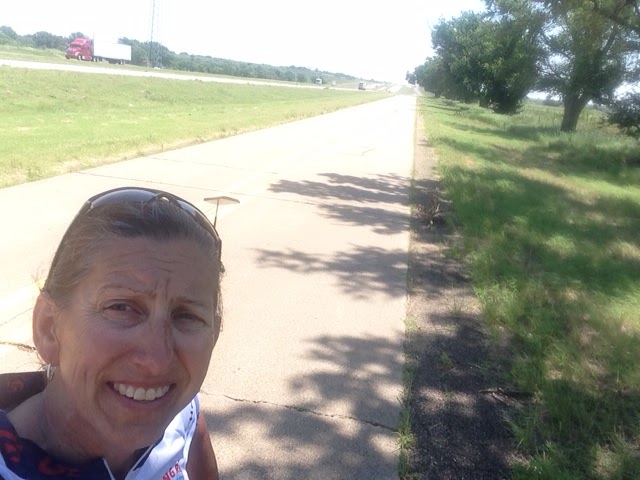
Rare to have shade trees along the Historic Route 66. Found this just east of Shamrock. I pedal in the cover of the trees even if it’s fleeting. Sun is intense with sparse cloud cover. Temps will near 100 but I finally have the wind at my back and that helps.
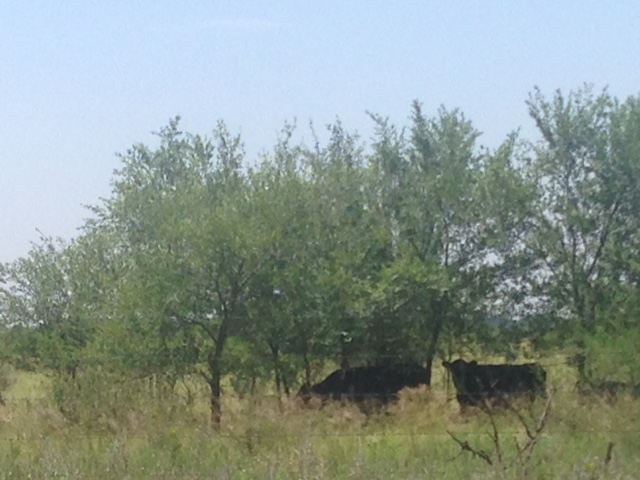
After taking the pictures I looked up an saw two cows staring at me. It was like a scenario from the Far Side.
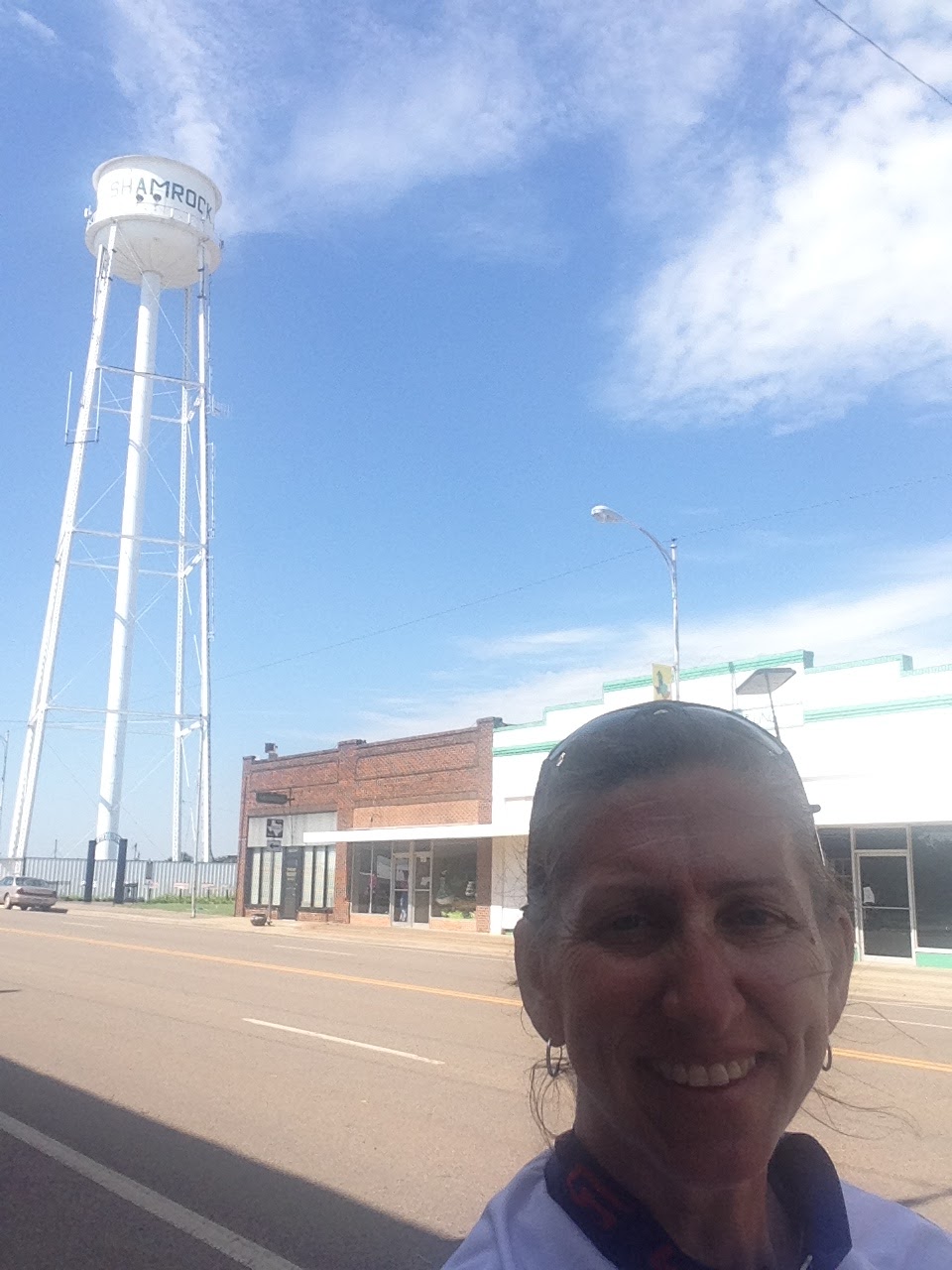
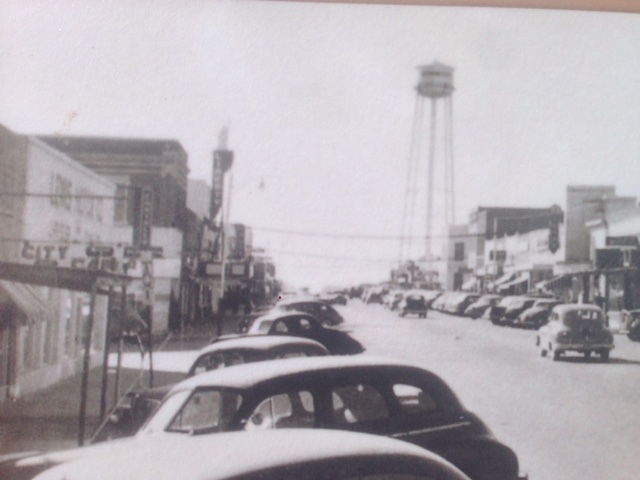
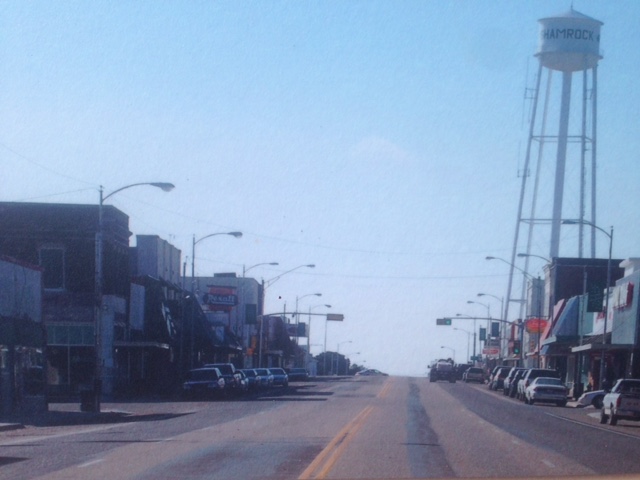
In Shamrock, Texas the water Tower is a noted landmark.
In 1915 the city leaders in Shamrock contracted with the Chicago Bridge and Iron Works to fabricate the Shamrock water tower at a cost of $6,560.
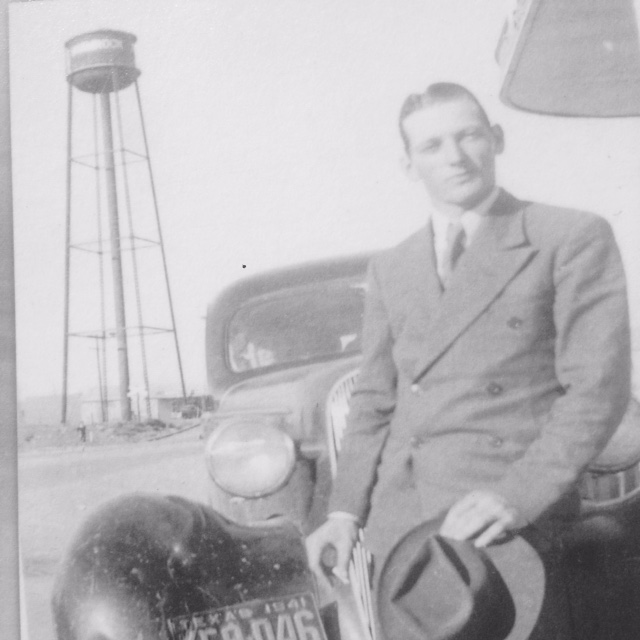
In the early years travelers used it as a photo op to mark their progress through the Panhandle.
Travelers and locals alike used it as a gathering place as they watered their horses and wagon teams. The concrete troughs under the tower quickly became part of the social fabric of the community.
Many recall their teen years when the tower was the turnaround for the main drag in town.