August 20, 2020 – Washington Co., WI – Jamming a lot of historic landmarks into this little bike tour.
Coming out of the Town of Hartford I climbed Powder Hill which is just south of Highway 60 and noted to be “the highest point in town.”
According to the Washington County Landmark Commission the hill was named after the owners “Pulver” which is German for Powder.
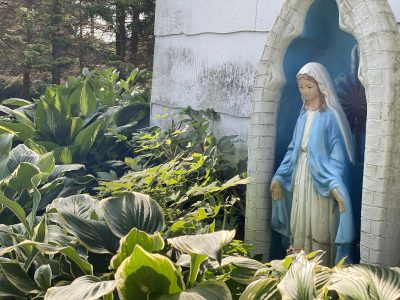
After that hill it was time to tackle Holy Hill in the Town of Erin. The Basilica of Holy Hill National Shrine of Mary is on the National Register of Historic Places, it is the highest hill in eastern Wisconsin at 1,409 feet above sea level.
”The first chapel was started in summer 1862 and finished on Good Friday 1863.”
Just up the road on Hwy 167 and north on Hwy 83 is the former Tally Ho Tavern.
“Built in the late 1870s as a hotel, general store and saloon. Over the years it served as a post office, dance hall, telephone office and tavern.”
Passed through Slinger a couple of times and was lucky enough to find Brian, the owner of the old Slinger Creamery building. He led a tour that included a couple old creamery signs.
Located just south of the railroad tracks, Brian said there was once a railroad spur that backed right into the building.
Found some signs of the seasons changing as I pedaled out of Slinger on Cedar Creek Road.
Local historians will be able to tell us where this little gazebo used to sit. Steve Awve moved it in 2015 and ran into a bunch of headaches including a low bridge clearance under Highway 45 (Awve was forced to reverse course. That prompted a police escort out of town.) Then some wires on Eighth Avenue and Chestnut forced him to remove the cupola from atop the bell.
An easy tilt of the 2-foot cap … if only Awve had known about the bees.
The other cool thing in Cedar Creek is the old post office known as the Maxon-Wright House, 3709 CTH C.
The stately White House is well hidden by mature trees and a long driveway. The tree closest to the road is marked “Do not cut – century tree.”
The primary sponsor for the Amazing Ride for Alzheimer’s is Cedar Community. Your partnership in this event will help to provide unique events and special activities for seniors at Cedar Community – right in your own back yard.
Cedar Community is a 501(c)(3) not-for-profit organization and is therefore supported solely by the gifts and contributions of friends like YOU. All gifts are tax-deductible to the extent of the law.
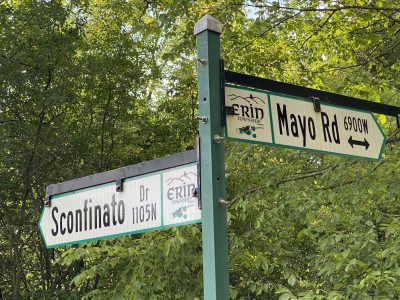
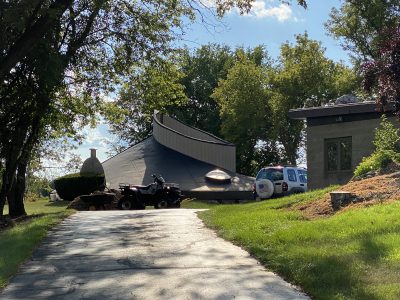
August 18, 2020 – Town of Erin, WI – Head south on Highway 83 and take a right on Mayo Road in the Town of Erin and you will come upon a subdivision that had very interesting intentions.
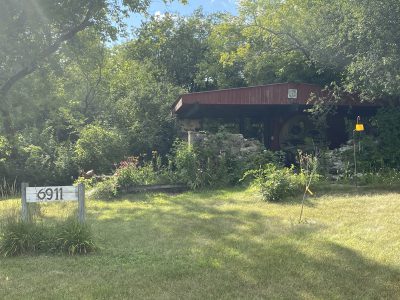
The subdivision on Sconfinato Drive was started in the 1960s by a man named Bob Caldart; he wanted to fill the area with unique homes. Also interesting to note, this is the only road in Erin without an Irish name.
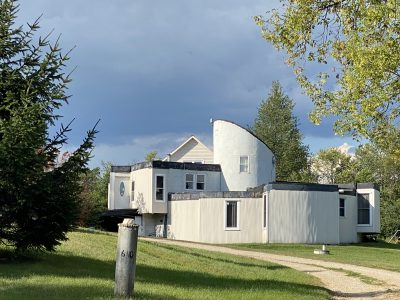
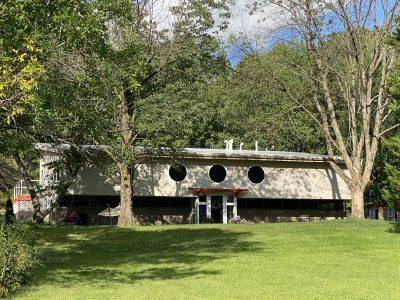
Nine people jumped on board right away and the wooded lots started to be filled with homes that featured unconventional shapes and unusual designs.
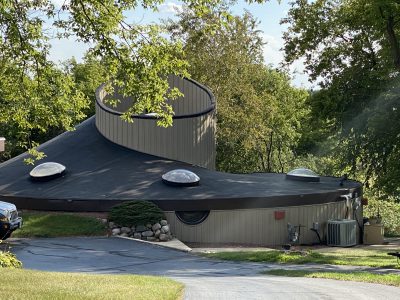
On first blush it’s a little Cat in the Hat with a flair for cardboard toilet paper roll (said with the best of artistic intentions.)
”Bob was an art teacher and his partner was an architect and they had this idea to build all these weirdo homes,” said Bob Blankenheim, a neighbor currently living in the subdivision.
Blankenheim is a building inspector. He spoke about the history of the area after being interrupted while mowing his lawn with a cigar in hand.
“The homes they built were not constructed to last long,” said Blankenheim, referring to one house as “the golf ball” and another as “a box standing on a corner.”
“Caldart’s intention was to create a subdivision of these exotic homes,” Blankenheim said.
After nine homes were built, interest began to wane. The covenant of the subdivision expired after 20 years and new owners started to remodel and build homes with more conventional designs.
“You‘ll see there are nine of the weirdos still in here and 26 regular homes,” said Blankenheim. “There’s no market for this kind of stuff; it is just built-in maintenance.”
Caldart also built a pottery studio in the subdivision where he would create in his workshop and then hold an open house, sometimes twice a year.
While Caldart had more plans, his neighbor said, he grew ill and died. His wife passed as well and the son recently sold two properties that were in the family including the pottery shop.
Just an interesting nugget of history if you’re driving the Rustic Roads and touring the Town of Erin in Washington County.
The primary sponsor for the Amazing Ride for Alzheimer’s is Cedar Community. Your partnership in this event will help to provide unique events and special activities for seniors at Cedar Community – right in your own back yard.
Cedar Community is a 501(c)(3) not-for-profit organization and is therefore supported solely by the gifts and contributions of friends like YOU. All gifts are tax-deductible to the extent of the law.
August 15, 2020 – Town of Addison, WI – Finding a beer cave in Fillmore earlier this week sparked my interest and rumor was there was another in the Town of Addison.
Yellowstone Trail is the old road that winds back through Addison Center.
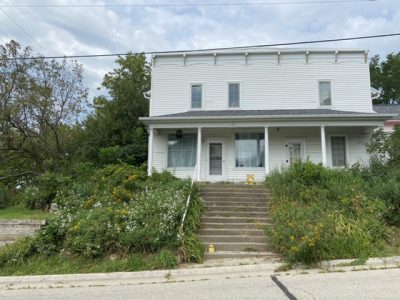
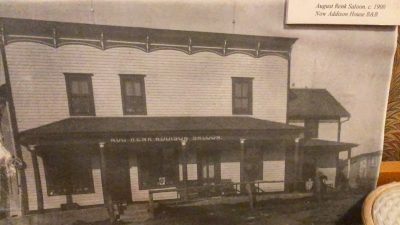
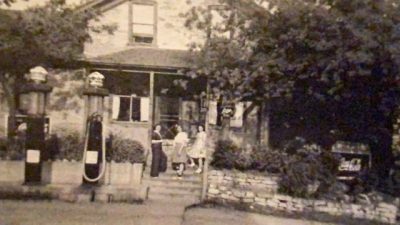
The Addison House used to be tavern and brewery.
The northeast corner was Addison’s general store and post office with a brewery and cheese factory added in the early 1900s.
Suzanne Fish is the owner of the Addison House, previously run as a bed and breakfast. She turned over a flashlight and pointed in the direction of the beer cave. “Railing, stairs, beer cave,” she said. “Just let me know when you’re back so I know it didn’t collapse on you.”
The beer cave was exactly what you would suspect to find in a Nancy Drew/Hardy Boys mystery novel.
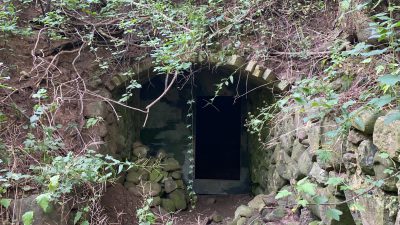
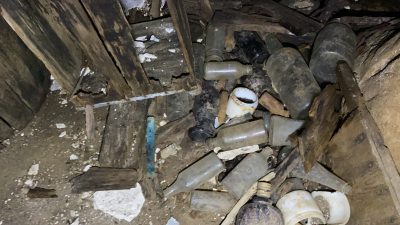
A rickety railing, inviting wooden stairs, tall grass and weeds, a random cement mixer and an open entrance with spooky anticipation written all over it.
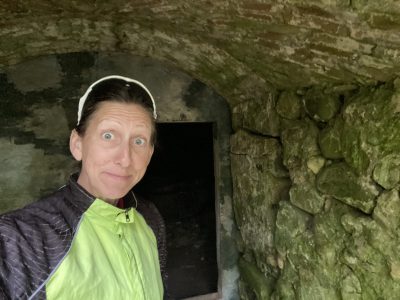
The arched entry was made of brick; even rows and solid. The entrance was particleboard with a hole big enough for a human. I lit my torch and looked inside. It was like a gold mine of adventure, however, I was far from being the first one ever inside.
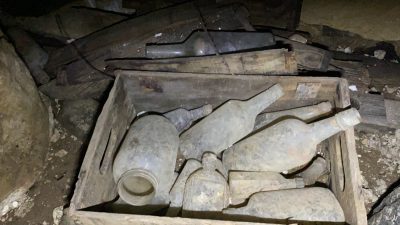
Aside from the metal pony keg in the corner the rest of the experience was vintage; dirt floor, old crate, box of dusty beer bottles and a big wooden beer barrel. It was empty.
The walls were a mix of stone a brick. The back wall, about 20 feet deep, was full of dirt from caving in.
A little wary but giddy with excitement I ticked off my list of things that would drive me out: no bats, no rats, no mice, no snakes, no big spiders nor any skeletons.
No full bottles of beer either in said beer cave but very much worth the adventure on my Amazing Ride for Alzheimer’s – Touring the Townships of Washington County.
The primary sponsor for the Amazing Ride for Alzheimer’s is Cedar Community. Your partnership in this event will help to provide unique events and special activities for seniors at Cedar Community – right in your own back yard.
Cedar Community is a 501(c)(3) not-for-profit organization and is therefore supported solely by the gifts and contributions of friends like YOU. All gifts are tax-deductible to the extent of the law.
August 14, 2020 – Washington County, WI – The annual amazing ride for Alzheimer’s has officially commenced with a swift pedal by Judy Steffes through Washington County. Your partnership in this event will help to provide unique events and special activities for seniors at Cedar Community – right in your own back yard.
Cedar Community is a 501(c)(3) not-for-profit organization and is therefore supported solely by the gifts and contributions of friends like YOU. All gifts are tax-deductible to the extent of the law.
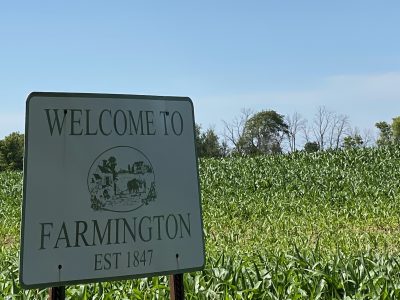
August 14, 2020 – Town of Farmington, WI – Touring the Townships of Washington County was an idea presented by my friend Mary Moll. She made it super simple by handing over 15 maps courtesy of the Washington County Landmarks Commission.
Following a memorial Mass for my father on Thursday morning at Holy Angels I struck out for the Township of Farmington in the northeast corner of the county.
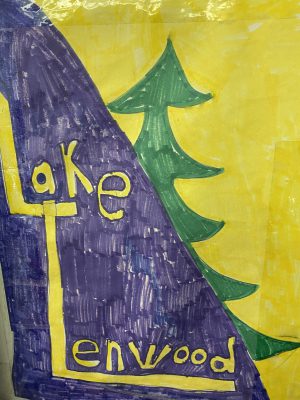
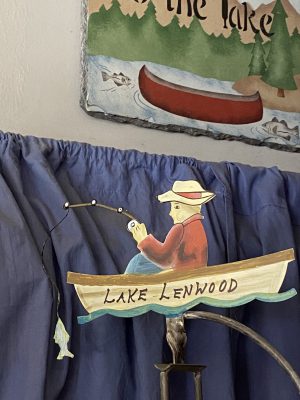
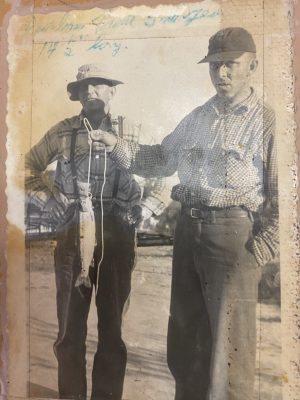
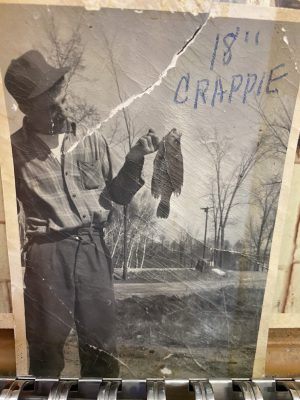
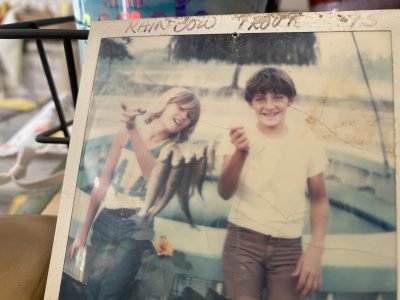
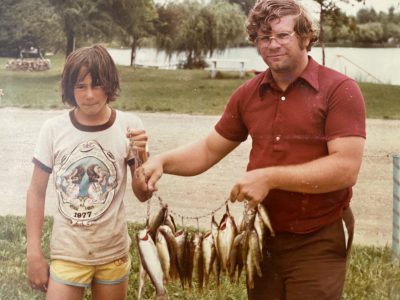
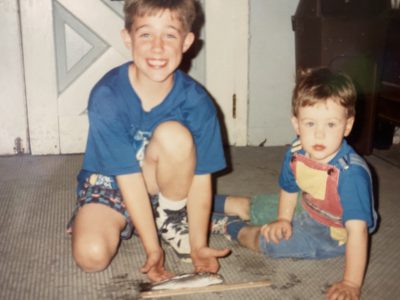
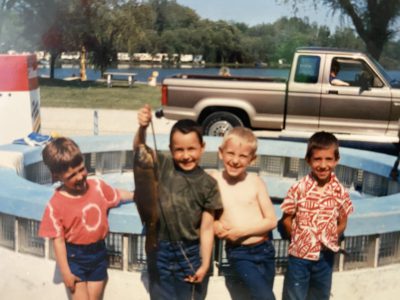
The Lake Lenwood Campground was my first stop; paging through the old fishing photo album was a step back in time.
Big catches, blue-jean shorts and dated t-shirts were part of the entertainment.
The cozy campground was super busy as parents and kids took advantage of the sunny weather and warm temps to splash in the water and enjoy the waning days of summer.
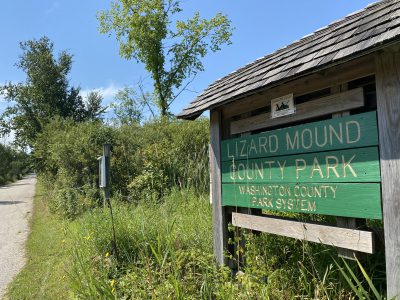
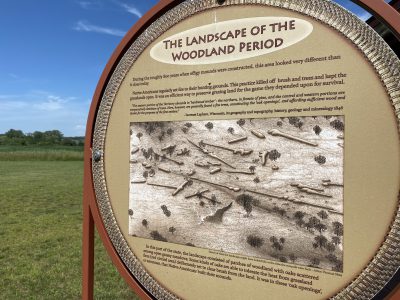
Next, I headed east on Highway A and rolled into Lizard Mound which is home to prehistoric effigy mounds.
There are 25 mounds in animal and geometric shapes that are preserved in a woodland setting. If you visit Shalom Wildlife Zoo up the road David Fechter has a lot of information on the Native American heritage in the area.
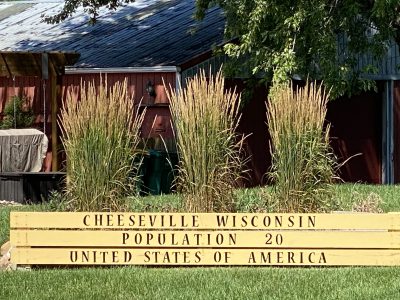
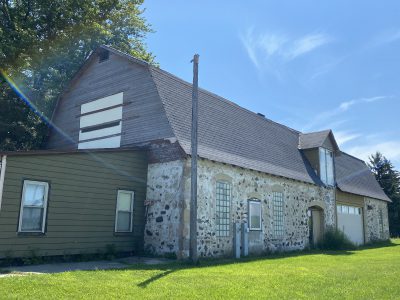
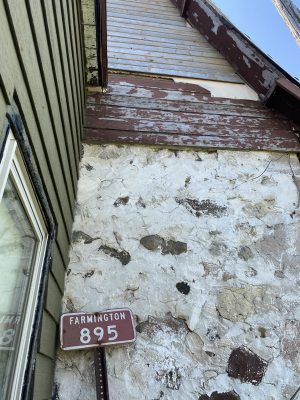
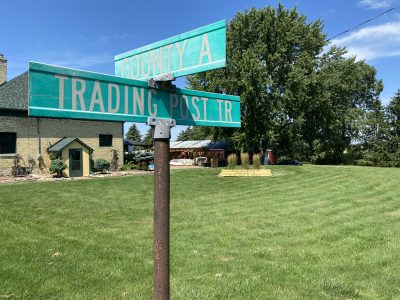
Further east on Highway A was the hamlet of Cheeseville. The field stone structure at the corner of Hwy A and Trading Post Trail is the old Cheeseville Dairy building that dates to 1881.
Kitty corner to the Dairy is an old schoolhouse that is now a private home. The brick building was constructed in 1912 and it was the second schoolhouse on the site and the first in the county to have indoor plumbing.
On a side note, I will always remember this intersection as the one where the mouse ran across my feet. I saw him coming. He wasn’t a small guy but he was determined to skitter across the road and nothing stood in his way.
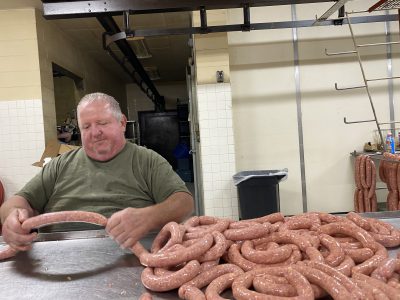
Made a quick jaunt off course and glided east into Fredonia and Ozaukee County to visit my friend Tom Schwai. He was busy making pepper jack cheese brats and hollerin’ at his grandson.
Tommy is gearing up for Schwai Fest on September 12, so mark your calendar and save the date. There will be food and “maybe some beverages” according to Tom, and music by Downtown Harrison.
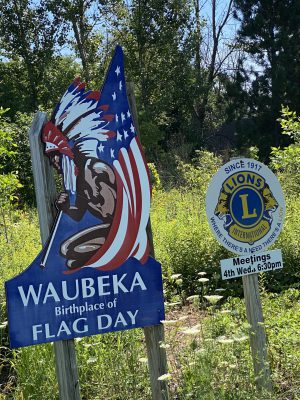
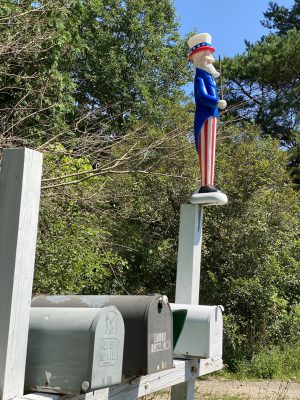
Love being able to stop and capture some of the classic Midwest markers on the side of the road.
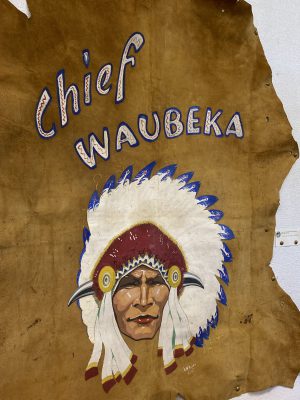
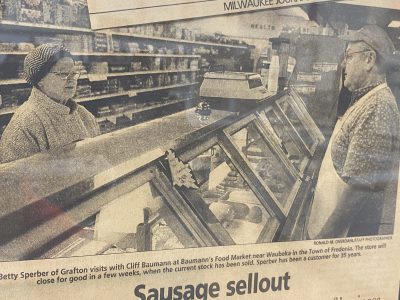
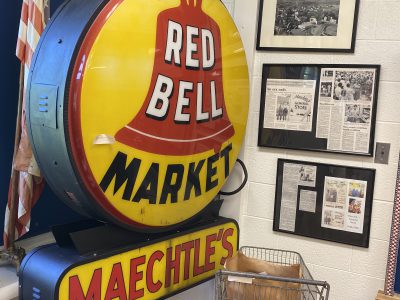
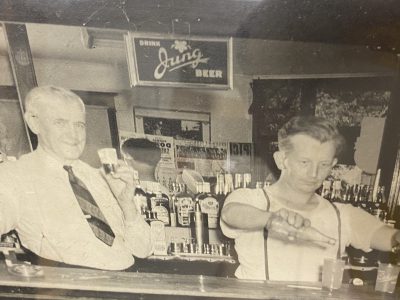
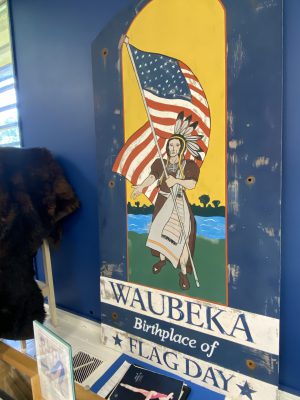
The Flag Day Museum is in the old Stony Hill Schoolhouse. The museum is open by appointment only but one of the caretakers was on site and had a key to let me in to explore.
The old classrooms were full of military and local memorabilia including the rich history of businesses from years ago like the button making factory, box-making shop and the old grocer Baumann’s Food Market famous for its Luxembourg cabbage sausage.
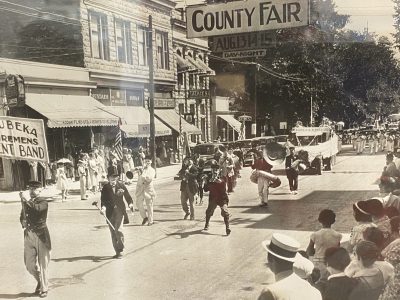
The big event through the years has been the Flag Day Parade held the second Sunday in June.
The 100-unit parade is a longstanding tradition In Waubeka.
Getting back on the township track, Highway H pulled me right into Farmington and past the Saxonia House in Fillmore.
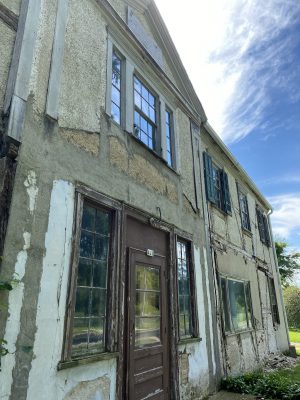
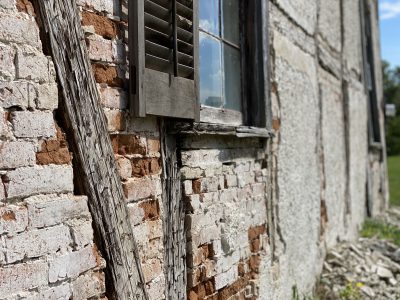
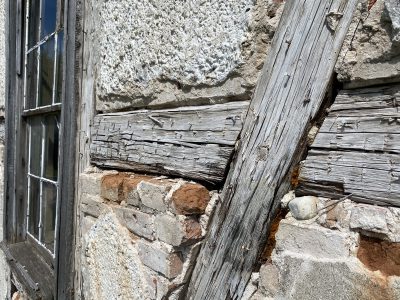
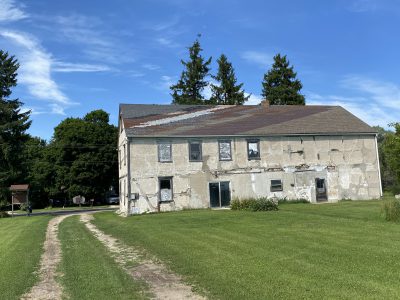
The authentic timber-frame building was put up in 1854 by German immigrants. It was built by Ernst Klessig for $3,000 and was once the “focal point of an 89-acre tract called ‘Spring Brook Farm’.”
The German architecture is visible under the cracked stucco. According to the History of Farmington book “the spaces between the hand hewn and pegged timber walls is filled with soft bricks.
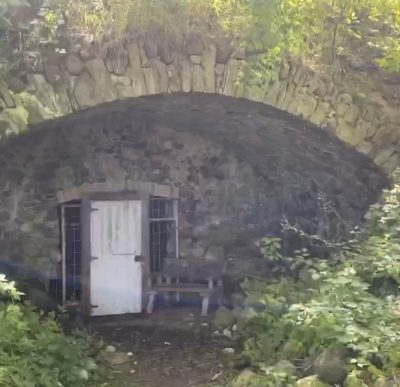
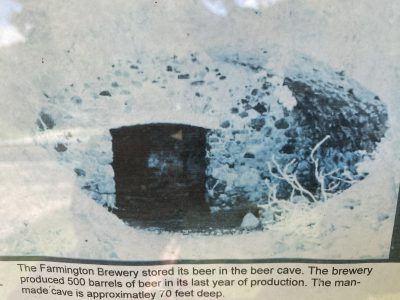
The best part of the property is found south of the home down a freshly mowed path. “Dug into the hillside is a cave-like cellar that once stored cooled kegs of Klessig beer.”
The cave is 70 feet deep and has two chambers. It is made of field stone with an arched entryway. Flat slate-like stone makes up the flue.
That beer cave has been one of the best backyard finds so far on the tour.
It was a 33-mile day on Thursday. Friday’s adventure heads west to the town of Wayne and then a quick jaunt south to Allenton and the big fish Fry challenge as the Allenton Fire Department tries to churn out 1,000 fish dinners in four hours. Come join us!
August 14, 2020 – West Bend, WI – The 2020 Amazing Ride for Alzheimer’s got underway slowly on Thursday. Following a memorial Mass at Holy Angels for my father I quickly pedaled out to Cedar Ridge for a photo shoot and that’s where we filled our first farm family video.
This year’s tour is staying close to home and highlighting the townships of Washington County along with local farm families.
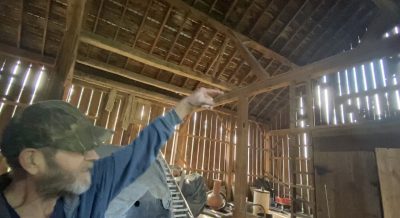
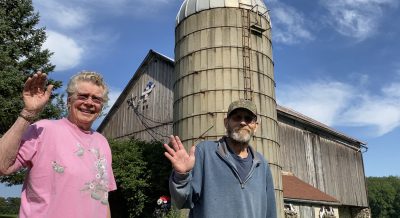
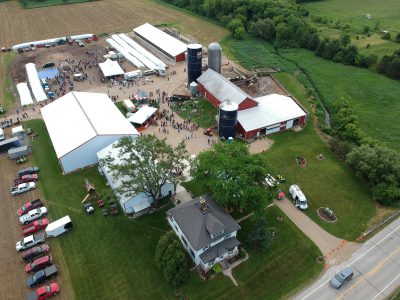
Ann Vorpahl, 84, and her son Dan have a recognizable rustic red barn and silo on Scenic Drive just south of Cedar Ridge.
Ann has lived there since 1963. “When Kennedy was shot,” said Dan.
The 40-acre property feels like country within feet of the city limits. A flock of geese fly low overhead as a pair of sand hill cranes cluck their guttural call strutting across the neighbors grassy front lawn.
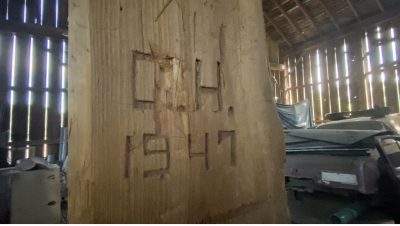
A carving in a wood beam inside the barn dates to 1947. “I don’t know what the initials C.H. stands for… do you, ma?” questions Dan.
“As kids we used to climb up in the rafters and jump down in the hay mow.”
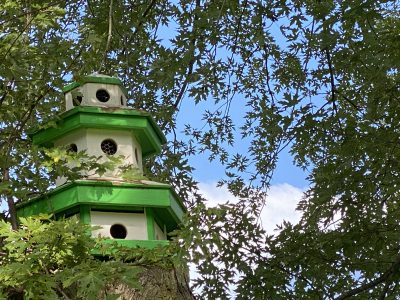
Dan is a retired carpenter. His handy work is part of the fabric of the property from a green and white bird house to a sturdy gazebo out back.
The gazebo serves as a year-round man cave. On the walls are deer skulls and antlers from seasons past. Photos blanketing the walls show hunters posing with trophy turkeys. “That one has a double beard and that one, too,” said Dan pointing from one photo to the next.
While Dan makes use of the good hunting land Ann is pleased with the mature trees in her yard, the hostas that have survived the frequent hungry deer and the serenity. “If I were in an apartment I’d be going crazy,” she said.
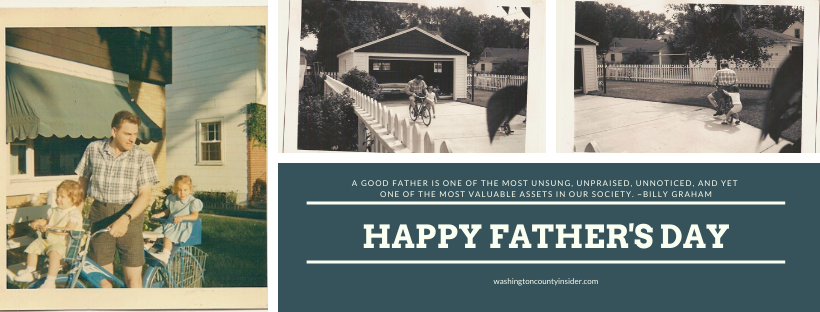
June 21, 2020 – Washington Co., WI – It is Father’s Day, my dad’s birthday and the first year he is not with us having passed July 18, 2019.
I have been asked the past few weeks where my annual bicycle tour will be this year and I will confirm there will be a tour and in a cozy fashion it will be close to home.
The tour will be called – Pedaling the Townships of Washington County: A tour of Families, Farms and Faith.
I am choosing to stay closer to home this year because I had a hitch in my giddy-up earlier this spring and on May 19 trusted Dr. Joel Wallskog to give me a new hip. Dr. W. came highly recommended by Gail Bonefant. “He looks good, smells good, and is a great surgeon,” she said.
Accurate on all counts.
Although I managed to get back on the bike nine days after surgery I am still on the mend and regaining strength and stamina.
Credit Mary Moll of Barton for coming up with the idea of exploring the local townships. One night at dinner she presented me with 15 maps from 1999 created by the Washington County Landmarks Commission.
The individual pamphlets provide details of each community with history and regional highlights.
– Town of Addison: A visit to the Addison House Bed and Breakfast will provide an opportunity to see the orginal beer caves.
– Town of Trenton: Schwalbach Brewery brewed an old-style lager beer. The bottles were made of clay instead of glass.
– Richfield Township: A home on Monches Road is a cross-shaped 2 1/2 story clapboard Victorian home with gabled roof and covered entry porch. Reportedly the home was purchased from a Sears catalog.
– Farmington Township: Founded Feb. 11, 1847 it was originally named Town of Clarence after the first boy born in the township. Soon the name was changed to Town of Farmington but for nine months in 1854 it was changed to Town of Carbon after settlers thought they discovered coal in the area. Later they found it wasn’t coal… and the name was changed back again to Farmington.
So, you get the picture…. there is plenty of exploring to do across Washington County.
Aside from the hills and the history I would like to delve into the area churches and cemeteries and the locally owned family farms. If you know someone in the townships who would like to swap out a story for a safe overnight stay – please send their name and contact information my way.
I would love to document the history of the family farms in photos, videos and even take some drone shots of the barns, silos, and homestead.
I plan on collecting names of family farms and laying out my route in July and then taking off and exploring for two weeks in August.
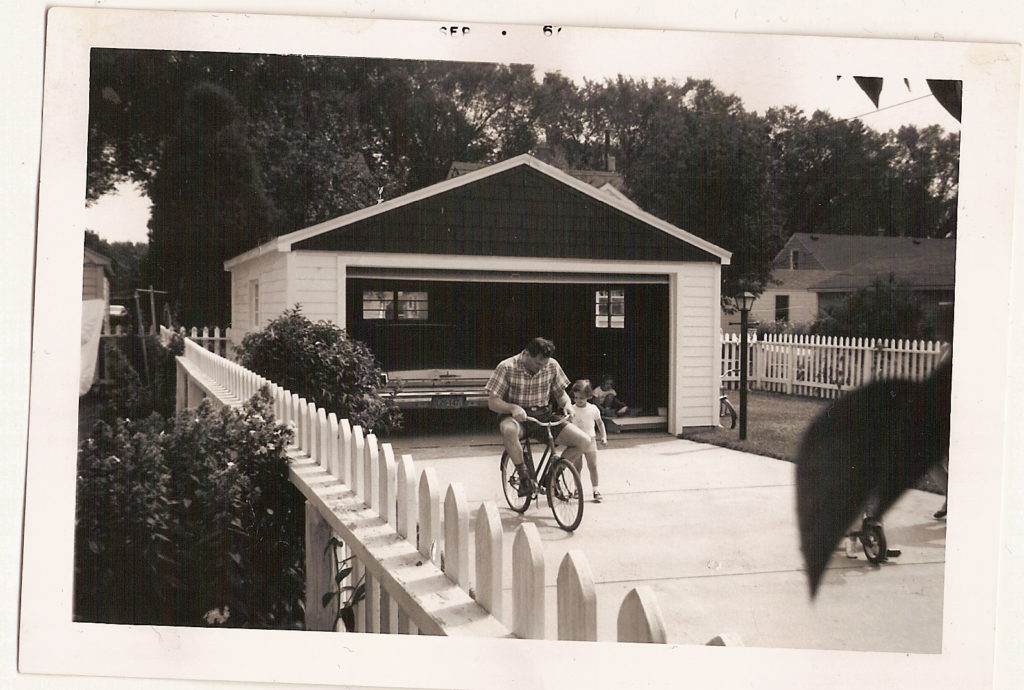
This year’s tour will be a tribute to my father who taught me a solid work ethic, a strong faith, and a love of bicycling.
My dad would have turned 96 years old today.
He was a veteran, a graduate of Marquette University, a father of seven and grandfather of 13.
When we were growing up, he made sure we all had bikes. Most were not the newest, but they all worked.
We were the Wallendas of Whitefish Bay when he attached three tandems together. It did not work like we thought but it was fun to try.
Old school German ingenuity.
My dad was a ‘happy’ Alzheimer’s and this year I will be raising money and awareness for Alzheimer’s; all money will go to Cedar Community which is a 501c3 nonprofit in West Bend. Stay tuned!
If you are a family-owned farm in Washington County that would like to be featured in the 2020 Amazing Ride for Alzheimer’s bike tour please contact Judy Steffes before August 1, 2020 at[email protected]
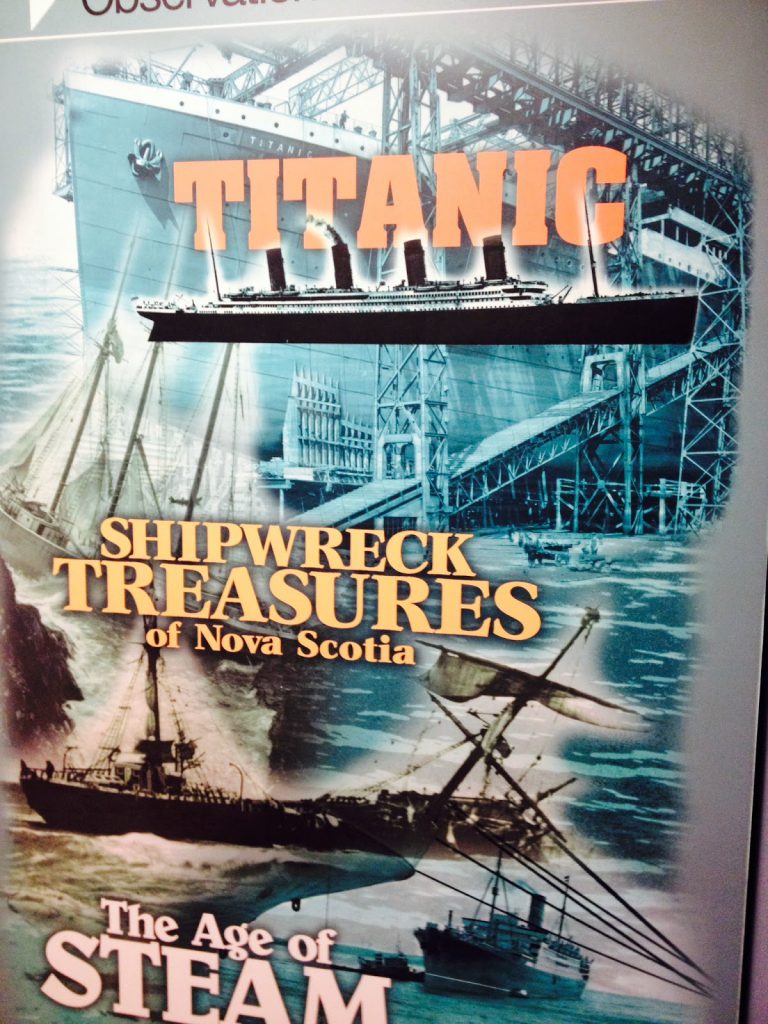
In 2014 I flew to Nova Scotia to pedal home on my annual bicycle tour. On my first day in Halifax I visited the Maritime Museum. There was lots of great history and artifacts about the Titanic and the museum documented the key role Halifax played in the disaster. Although the maritime city was about 700 miles from where the Titanic went down, it was the closest land port and the primary site for the recovery effort.
Titanic at museum
The Maritime Museum in downtown Halifax has a detailed display on the recovery of victims of the Titanic. Many were brought to the small lakeside community of Halifax.
To set the stage for the gritty story of the recovery there are displays of items from the ship and small details about the vessel itself such as the steel plates used in construction of the Titanic were fastened by 3 million rivets. The steel however contained high levels of sulfur which made it brittle at cold temperatures.
Many pieces at the museum were recovered by Capt. W.G. Squares de Carteret of the cable ship Minia. Wreckage included a piece of cabinetry, a deck chair and sections of carved wood from the landing of Titanic’s staircase. The dark wood features an egg-and-dart pattern from the second- class smoking room.
The cabinetry is the only piece known to have survived the Titanic. Floating wreckage was found by the ships that recovered bodies of the victims.
Piles of coffins were brought to the wharf in Halifax. There were strict class barriers; first class passengers were moved in coffins. Second and third in canvas bags and members of the crew were taken off in open stretchers. Hearses and wagons took bodies to a temporary morgue at the Mayflower curling rink.
Forty undertakers were on hand. Halifax buried 140 victims, including the nameless. Three churches handled the funerals.
Francis Dyle was quoted on May 3, 1912, saying, “I honestly hope I shall never have to come to another expedition like this. The doctor and I are sleeping in the middle of 14 coffins.”
Josyann Abisaab, whose great grandfather died on the Titanic, shared more insight in an article, “The Halifax-Titanic Connection.”A portion of that story is below.
Cable ships were mobilized after the Titanic tragedy because they were well equipped with wireless telegraph and large storage areas to hold the victims. Sadly, the brave men on the cable ships that set sail from Halifax with a cargo of ice, coffins, embalming fluid and canvas bags, would soon learn that the grim task of recovering Titanic victims would not be easy.
The four ships sent from Halifax to pluck the victims out of the frigid waters recovered a total of 328 bodies, of which 119 were buried at sea. The bodies of 59 of the victims were reclaimed by their families. The remaining 150 were buried in three cemeteries in the city.
the Titanic victims were somberly unloaded at the Flagship Wharf on the Halifax waterfront, church bells tolled and horse-drawn hearses owned by Snow Co. carried the coffins to the morgue. The city, with much of its center draped in black bunting, went into mourning.
Click HEREfor more details on the Maritime Museum in Halifax.
Sidebar story: While digging through my travel journal for the Halifax-Titanic story I came across another gem from that same bike tour.
Butterbox Babies
Since I arrived in Halifax 12 hours late I was already behind my self-imposed schedule.
Air Canada managed to help hail a shuttle to the Maritime Museum in downtown Halifax about 60 miles away.
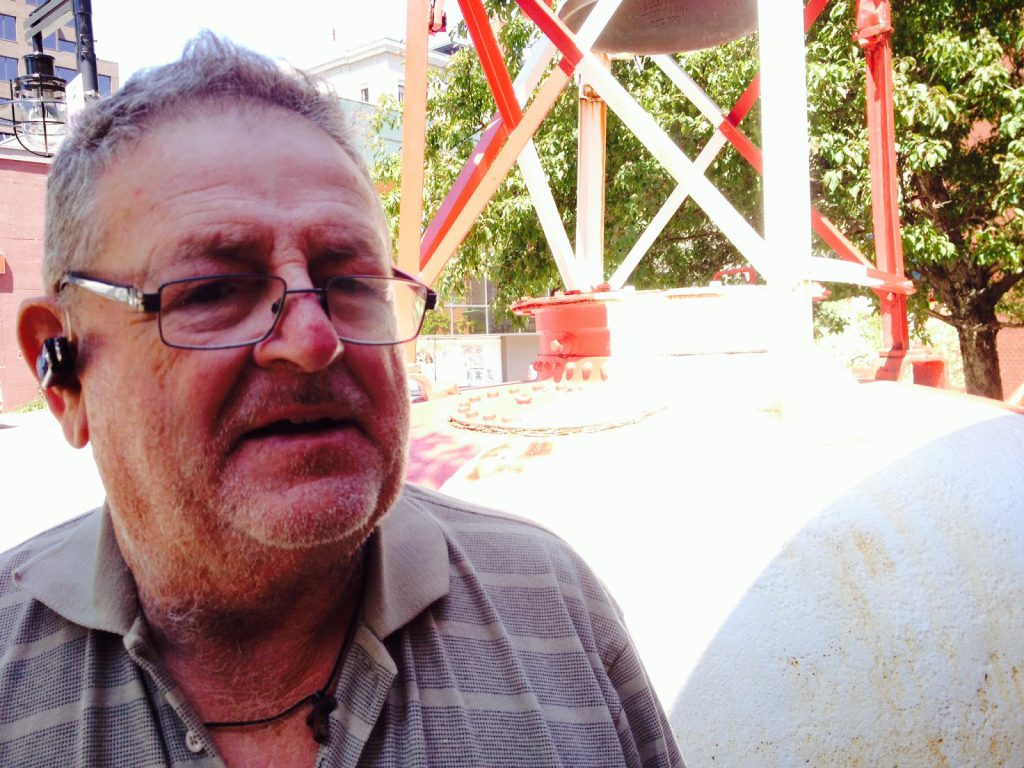
My driver was Bill Sullivan, a happy-go-lucky guy with three-days growth of gray stubble, a Bluetooth in his ear and a plastic-looking wood cross around his neck.
“I left school when I was 11 to get a job,” Sullivan said with a blended Nova Scotia/ Boston accent.
Sullivan delivered telegrams on a bicycle.
“We had a uniform and everything,” he said describing his cap, boots and tunic. “I delivered a birthday message to an old woman. She stood in the doorway and said, ‘Aren’t you supposed to sing?’ Then I had to deliver a telegram with a black border. I got to the lady’s home and she knew right away.”
The woman said, “Ain’t you supposed to ask me if I’m alone?” Sullivan said he did. “Ain’t you supposed to come in and set with me?”
Sullivan said he did — for a while. The woman left the telegram lying on the table unopened.
“Craziest thing I’d ever seen, her eyes welled up but she never cried one tear,” he said confirming the woman’s son had been killed in the war.
Sullivan, 73, was great at conversation. He kept it going. No sense in silence when it could be filled with a story.
“You familiar with the Butterbox Babies,” he asked? “There was a dairy that sold butter in boxes and those boxes were the perfect size for a coffin of an infant born at the Ideal Maternity Home.”
The outfit was in an eastern province of Nova Scotia in the 1930s and ’40s.
“That couple, the Youngs, would take in unwed mothers, charge them $500 a week and either tell them their baby had died and then sell it or they eventually did die because all they fed the babies was molasses and water,” he said. “I was one of those babies, but I was adopted.”
Sullivan said he bounced around to a number of foster homes including a family in New Jersey.
When that story about the Butterbox Babies came out, the kids that survived started finding each other,” he said. “We had a reunion recently and 120 of us showed up.”
Sullivan confidently drove through traffic. He wore rectangular glasses and had a collection of sunglasses hanging from the visors in the van.
“You into cowboy movies?” asked Sullivan, not waiting for an answer. “What was Tom Mix horse’s name?”
Old Westerns. That was another one of his passions. “Tony. Tony the Wonder Horse,” he said with assurance.
“You know any cowboys?”
I fumbled a weak guess of Ronald Reagan. Apparently he wasn’t big enough to have his own horse with a name.
“Gene Autry; now there’s a cowboy. What song was his most famous?” grilled Sullivan. “You sing it once a year … .”
I was about to blurt out “Happy Birthday” but Bill couldn’t wait for my incorrect answer so he started singing, “Rudolph the red-nosed reindeer … .”
He was so proud of himself but he wasn’t smug.
“Gene Autry’s horse was Champion. How about Roy Rogers — what was his horse’s name?”
The cowpoke trivia continued. “Trigger,” he said quickly. I knew that one but just blanked and Bill wasn’t big on a three-second pause or allowing me time to phone a friend.
Arriving at the Maritime Museum I knew I definitely needed to work on my equine movie history.
Sullivan was a gracious driver. He helped unload my bike and was eager to pose for a photo before hitting the dusty wagon trail again.
It is the day Jesus rode a donkey into the town of Jerusalem and a large crowd gathered. They laid palm branches across the road, giving Jesus royal treatment. The hundreds of people shouted “Hosanna to the Son of David! Blessed is he who comes in the name of the Lord! Hosanna in the highest heaven!”
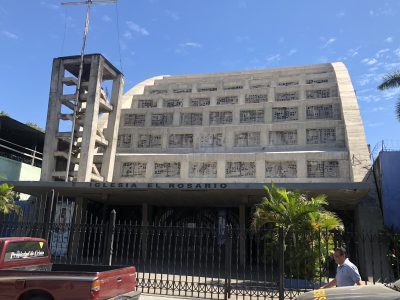
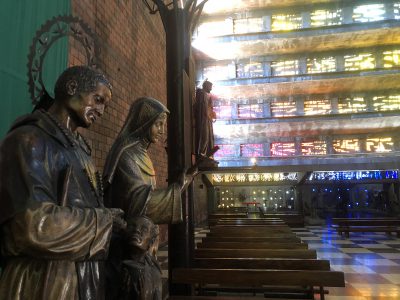
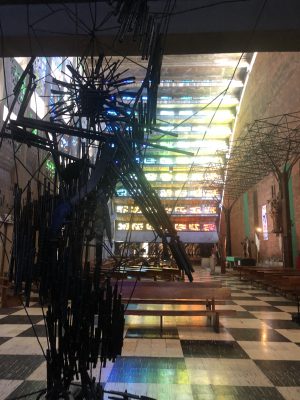
On this Palm Sunday a special segment involving a tour inside Iglesia El Rosario; described as “one of the finest churches in Central America.”
In January 2019 the story of Nancy and David Slindes trip to El Salvador was published on WashingtonCountyInsider.com
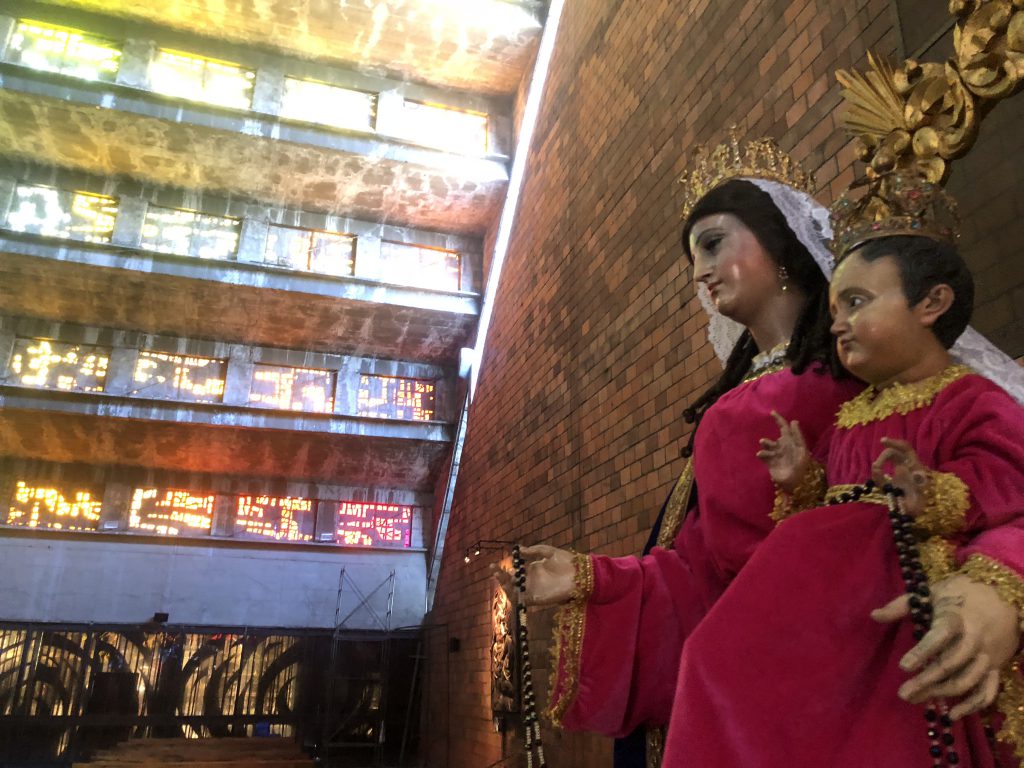
The couple have been doing mission work in El Salvador for 30 years. During one of the cultural days the Slindes visited the church. The artwork inside is incredible including an abstract version of the stations of the cross.
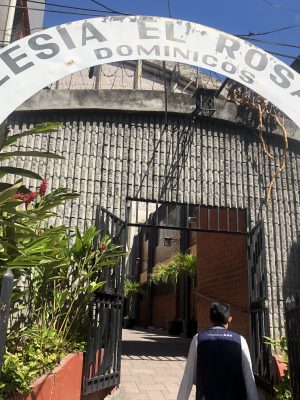
The main street entrance of the church, across from Libertad Plaza, is locked.
You have to turn the corner to find a narrow brick walkway located past a black metal gate and that leads to a side door to get into the church.
The concrete facade of the church is unassuming compared to what you encounter as you cross the threshold.
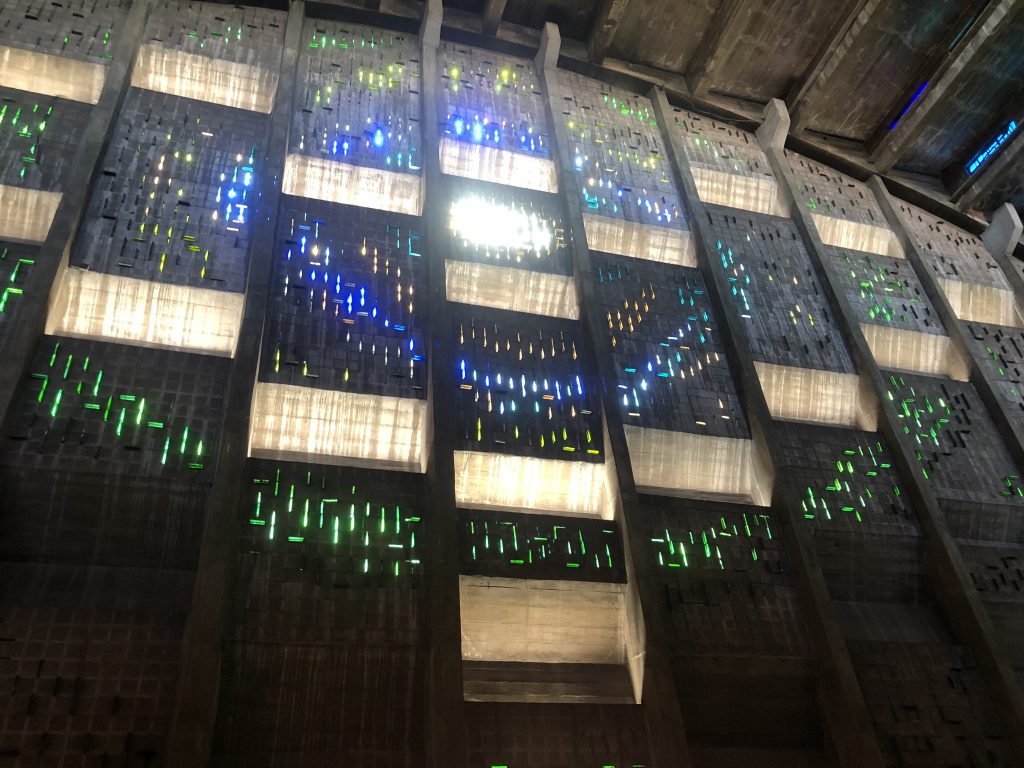
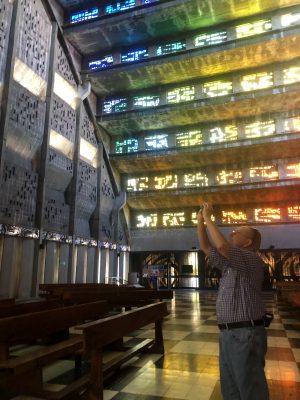
The arched interior features tiers of stained glass that cast a brilliant rainbow of light throughout the building.
The church, completed in 1971, was designed by sculptor Ruben Martinez.
There are quite a few well-thought-out intricacies regarding the interior design; one in particular has a very Indiana-Jones flare.
Across from the altar the wall is sectioned off in small blocks of stained glass. When the sun hits it just right the beam of light comes through the center “eye of God” and shines perfectly on the crucifix of Christ on the opposite wall.
There are a couple of other nuggets of history at Iglesia El Rosario including bullet holes in the concrete facade of the building; remnants from the civil war of the 1980s.
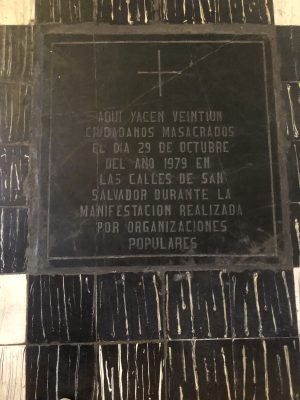
To the right of the altar on the floor is a stone marker; this is where 24 people are buried. They were killed by police May 9, 1979 during an anti-government protest that happened in the town square across the street. According to an article by the BBC,
“Witnesses said the steps of the cathedral were littered with bodies. Freelance photographer Ken Hawkins told the Los Angeles Times there had been no warning from government forces before the shooting started. “There was a continual burst of very heavy fire for about two and a half minutes,” he said. “People started screaming and running to the church but many were hit before they could get there.”
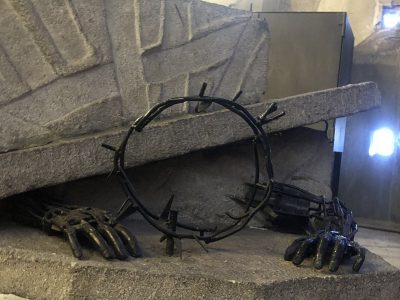
At the other end of the church is an abstract version of the Stations of the Cross. Only the hands and arms are used to represent Christ. The metal used for the sculptures was material that remained following construction of the church.
Christ has risen sculpture
Click HERE to read more about the Adventure in El Salvador.
August 16, 2019 – West Bend, WI – Today, August 16, is the anniversary of the death of Rock n’ Roll icon Elvis Aaron Presley.
The singer, born in Mississippi in 1935 was found dead on this date at his home in Graceland in 1977.
It was June 2012 when I had a brush with the history of an Elvis encounter. I was on a bicycle tour and happened upon the Old Home Motel in Adamsville, Tennessee.
Adamsville, TN is home to Buford Pusser, the legendary lawman who broke up moonshine operations and put a lockdown on gamblers, prostitutes and organized crime.
The small town in McNairy County wraps its arms around the Pusser history. A silhouette of the ‘Walking Tall‘ movie character carrying a big club is pictured on the community’s water tower.
The local police department has a glass display case with photos of Pusser with country singer Johnny Cash, letters of commendation, and again, the famed big club with which Pusser said he would use instead of a gun to keep law and order.
Just up the Main St. in Adamsville is the Old Home Motel.
Built in 1950, the 15-unit motel hasn’t changed at all. The lettering on the original street-side sign is a bit faded, but you can still see the motel name and the words ‘swimming pool’ written in cursive at the bottom.
The room doors are still painted with a bright array of colors including tangerine orange, brilliant yellow and turquoise blue.
The best thing about the motel is sitting in a plush, brown leather chair in the front office. Owner Juanita Richardson is 91 years old.
Juanita Richardson
She started serving customers in a restaurant when she was 17 and she’s been in the motel/restaurant business ever since.
“When my husband bought the restaurant across the street I liked to have croaked,” said Juanita.
We sat and talked in the front office of the motel for about three hours. The office also served as the living room of her house.
She sat along a series of street-side windows, the blinds pulled over a bulging neon sign that buzzed ‘open’ for the business.
Her feet, covered in black slippers with white fluff at the top, were perched on a small, round wicker table.
Juanita had high cheekbones and white hair parted on the side. She had gray-blue eyes, pale skin with a few light brown age spots and no makeup. She reminded me of the actress Jessica Tandy.
Juanita spoke with a southern ease, some self-effacing humor and when she reenacted a story her voice rose an octave or two.
“We opened the Old Home Restaurant on a Sunday,” said Juanita.
“We could seat 100 and I had homemade rolls and homemade dressings including thousand island, blue cheese and Roquefort and customers were lined up across the street,” she said.
A lightning strike eventually put an end to the restaurant and for years after Juanita and her husband Joe ran the motel.
“Elvis stayed here once,” she said.
Sheriff Pusser came over and picked up a key from Juanita’s husband. “Buford wanted to sneak Elvis in and out,” she said, determining the ‘stay’ was in the late 1960s.
“Elvis really led a miserable life,” said Juanita. “He had more money but he no privacy and if you stop and think about that, it’s horrible.”
Elvis stayed in room 115 at the Old Home Motel. Juanita said some customers ask for that room in particular.
“I suppose if I’m going to sit here and talk to you I might as well tell you about the saddest part of this ole’ story,” said Juanita.
There was still some strain in her voice when she told me about the day in 1976 when her husband killed himself. “He was a drinker and it just got worse when we came to town,” she said.
“That turned my basket upside down.”
I stopped taking notes as Juanita talked about depression, and what she would do as a single mom with a business at age 47.
“Natalie was daddy’s girl,” she said. “She ask for a dime and he’d give her a quarter. She’d ask for a dollar and he’d give her five.”
Juanita cried daily and worked. “I’d tell the maid to take off the weekends and I’d make 28 beds and clean the rooms,” she said. “I didn’t eat and my weight dropped to 105 pounds.”
It was one New Year’s Eve when Juanita was watching TV and the big ball drop on Times Square.
“I closed my eyes and made a resolution to change; I just knew I couldn’t go on like this and for some reason I wondered what people on the other side of the world were going through.”
Juanita said she got up the next day and still had no clue how to change her situation.
Then she looked at me and said, “But now I’ve been to 25 foreign countries.” And she started listing them: Norway, Sweden, England, Holland, North Africa, Portugal, Germany, Spain, and Russia.
“In North Africa we were at a dinner where a goat’s eye was put right in the middle of a dish and it was just staring at me,” she said, her voice rising. “Then a half-naked native dancer came and pulled me up and tried to get me to dance.”
Juanita clutched a Kleenex while she talked and held it to her mouth when she laughed.
In another country, she couldn’t remember which, she ate what the tour guide later told her was a fried blood clot. “I’d like to have flipped,” said Juanita.
She reminisced most about her trip to Russia. “I never laughed so much in my life,” she said talking about the trip she took with her friend Carol Jean.
“Talk about country girls who went to town. We were just a couple of dumb-dumbs; I don’t know how we ever made it back.”
Juanita said they traveled by train in Russia. “We didn’t know beans about nothin’ but at least we knew to pack a lunch,” she said. Two gentlemen from the States rode in their same train car. They didn’t pack a lunch, so the ladies shared. “Then they left to go find some food. They got some cookies at the end of the train and brought 10 back. It turns out those cookies cost $6 a piece,” she laughed.
Juanita said the travel pulled her out of her depression “because around here when I saw friends I knew they felt sorry for me because of Joe, but when I traveled… nobody knew.”
Juanita said she always wanted to go to Australia, but the cartilage in her knees was so bad now it hindered her walking.
She said she’d keep working at the motel because it kept her active.
So far on this tour, she’s one of the most inspiring people I’ve met.
Comments:Some friends and I spent about an hour today talking with Juanita. We enjoy our visits with her. Today her conversation centered on The Bike Writer. She showed us a card you left her. I think you made a hard-working lady happy. Sylvia
Sarah Juanita Richardson, owner of the Old Home Restaurant & Motel in Adamsville, Tennessee was born on March 16, 1921 in Hardeman County, Tennessee. She was a 1940 graduate of Middleton High School and grew up during the Great Depression with her two brothers and four sisters.
Following graduation she worked at the New Southern Hotel in Jackson and later married Joe Richardson. The couple owned and operated a small restaurant in Ripley, Tennessee before moving to Adamsville in the late 1950’s where they bought some property and started a business they named the Old Home Restaurant. It became one of the most popular places to dine in the area. They later built a 14-unit motel, which they opened in 1960 and named their business the Old Home Restaurant & Motel. Following Joe’s untimely death in 1976 Juanita continued to operate the restaurant and motel by herself, turning it into a very successful business. She was known as one of the best cooks for miles around and customers enjoyed her delicious plate lunches, club sandwiches, homemade salad dressings, homemade rolls, and homemade cobblers. In 1994, at the age of 73, she decided to close the restaurant and slow down a little, but still worked seven days a week running the motel.
She was a close friend to former Sheriff Buford Pusser and he came to her for encouragement and advice many times in his life. She spent countless hours telling her motel guests and visitors to the area stories about Buford. Besides being an excellent cook, Juanita had many other talents such as smocking, painting ceramics, and making wreaths and other floral arrangements. She loved to travel, especially overseas, and had visited close to 25 foreign countries including Russia, Greece, Turkey, Sweden, Italy and Egypt. She enjoyed watching the Atlanta Braves, Tennessee Vols, Memphis Tigers, Memphis Grizzlies, and listening to the Adamsville Cardinal games on the radio. Juanita was the oldest member of Adamsville First Baptist Church, most likely the oldest business owner in McNairy County, a member of Eastern Star, and Daughters of the Confederacy.
She departed this life on December 8, 2015 at the age of 94 years, 8 months, 22 days, dying peacefully at her home. She was preceded in death by her parents John Lucian and Hittie Pearl Vaughn Sain, two brothers Mayo and Lenon Sain, and four sisters; Katrina Sain, Jo Ann Sain, Gloria Roberts, and Sue Scott. She is survived by a daughter Nita Evans and husband Tom of Adamsville, whom she often stated she loved like he was her own son; two grandchildren, Natalie Evans Luttrell and husband Kyle of Adamsville; Noah Evans of Adamsville and his fiance’e Allie Rhodes; one great granddaughter Sadie Kate Luttrell of Adamsville, and future twin great granddaughters due in February. She is also survived by several nieces and nephews, and special friends who were like family; Jean Greenley, Liz Knight and Alex Weiler.